
From Chablis to Beaujolais: A Taster’s Guide to the Exquisite World of Burgundy Wines

As with all French wines, the appellation “Burgundy” refers to the region in France from which all true Burgundy wines originate. Situated on the eastern side of the country, across from the River Saône, Burgundy stretches from Chablis near Auxerre in the north to Mâcon and Beaujolais in the south. The region is divided into six principal wine-producing areas: Chablis, the Côte d’Or (comprising the Côte de Nuits and the Côte de Beaune), the Côte Chalonnaise, the Mâconnais, and Beaujolais.
Terroir and Classification
From the highly prized Grand Crus and Premier Crus to the equally delicious but less vaunted village and regional appellation wines, Burgundy classification is based primarily on soil quality, referred to by French vintners as terroir. The fundamental characteristics of the grape, such as flavor and acidity, are strongly affected by the soil in which they grow. As such, the wines produced in the Burgundy region are thought to vary significantly in quality based on where the grapes used were grown.
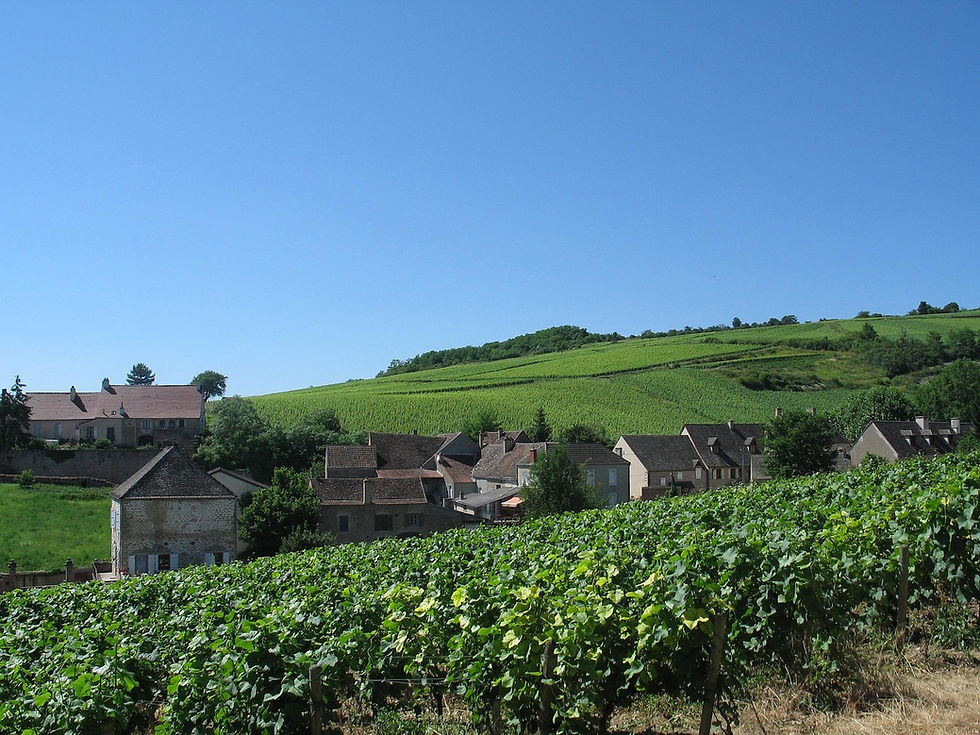
For instance, Grand Cru wines are considered to be the finest Burgundy wines in the world because they are produced in the Côte d’Or, a hilly, temperate region in eastern France, which is technically considered part of Bourgogne. Grand Cru wines account for a minuscule portion of the various Burgundy wines, hovering somewhere around 2%, yet these are the most sought-after and indeed, the most expensive wines to come out of Burgundy. On the other hand, village and regional appellation wines are so called because they are made with grapes grown in supposedly inferior soil.
The classification tiers, from highest to lowest, are:
Grand Cru – the rarest and most prized wines (only about 2% of Burgundy’s vineyard area, or ~550 hectares of ~28,000).
Premier Cru – high-quality wines from specific plots within villages.
Village wines – made from grapes grown around particular villages.
Regional appellations – entry-level wines labeled simply as “Bourgogne.”
Production and Global Reach
While Grand Crus dominate prestige and price, they represent only a sliver of Burgundy’s total output. The majority of production comes from village and regional wines, many of which are far more affordable. According to the Bourgogne Wine Board, nearly 70% of Burgundy’s total production sells for under €10 in French supermarkets (Burgundy Report), showing there are options at nearly every price point.
Exports also highlight Burgundy’s global demand:
In 2024, U.S. imports of Bourgogne wines reached ~20.9 million bottles, up 15.9% over 2023 (BIVB – Bourgogne Wine Board).
The U.S. accounted for 23.5% of Burgundy’s export revenue, making it the leading market outside Europe (BIVB).
In the first half of 2024 alone, Burgundy shipped 9.3 million bottles worth €153 million to the U.S., up 8.2% in value year-on-year (BIVB).
Red vs White Burgundy

Grand Cru Burgundies include both the red and white varieties, but the price tag for a bottle can be pretty steep. Grand Cru bottles often sell for hundreds—or even thousands—of dollars per bottle, making them luxury purchases. By contrast, regional and village appellations are far more affordable, which helps explain their growing popularity with American wine lovers, particularly white Burgundies.
In the U.S., 63% of imported Burgundy wines in 2024 were white wines, while reds and rosés made up 27% and Crémant (sparkling) wines made up 10% (BIVB). This is partially because of their much lower price tag, but also because they are easily available in many parts of the country and appeal to the American taste for Chardonnay. For wine enthusiasts eager to sample an authentic Burgundy without breaking the bank, regional whites (such as Mâconnais Chardonnay or Bourgogne Blanc) are a strong entry point.
Burgundy Today: Tradition Meets Global Demand
Burgundy’s wines embody a rare balance between heritage and accessibility. At the top of the hierarchy, the Grand Crus showcase the unmatched influence of terroir and centuries of craftsmanship, while the more widely available regional and village appellations highlight the region’s adaptability to evolving global tastes. With exports climbing—particularly to the U.S.—and white wines leading in popularity, Burgundy continues to prove that its appeal extends far beyond France’s borders. Whether indulging in a coveted Premier Cru from the Côte d’Or or enjoying an approachable Mâconnais Chardonnay, wine lovers everywhere can share in the timeless story of Burgundy.

Comments