
Do Bearded Dragons Have Feelings?

Updated: Oct 15, 2025

Bearded dragons are one of the most popular pets in the U.S. when it comes to lizards, and reptiles in general, but I’ve often wondered if these fascinating and often solitary creatures are truly able to bond with humans. Do bearded dragons have feelings similar to dogs and cats that would allow them to show love to their human companions? How well do they do as pets? I decided to do a little bit of research to find out.
Before we delve into the details, let’s answer the main question here - do bearded dragons have feelings? Based on all the available research, the general consensus is yes, they do have feelings, although not on the same order as mammals like cats and dogs, or even other reptiles. Bearded dragons can bond to their human companions, but the level of affection and comfort they show in the presence of their humans depends primarily on their individual personality.
The real difference between bearded dragons and mammalian pets is the type of emotion they display. Bearded dragons have been known to show feelings of anger, fear, boredom, and restlessness, similar to cats and dogs. Some owners have also reported instances of their bearded dragons cuddling up with them or seeking comfort from them in moments of fear or stress. However, this is not a standard, characteristic behavior in bearded dragons as it is in cats and dogs.
Do Bearded Dragons Have Emotions?
According to most scientific literature, bearded dragons, along with most other reptile species, do not have a strong emotional component to their psychological make-up. The vast majority of reptiles live solitary lives, so they never had to develop the emotional breadth necessary to live in a social group. Simply put, there was no evolutionary benefit to reptiles developing the emotional part of their brains, so it never happened.
That being said, many owners have reported that their bearded dragons actually exhibit a wider range of emotions than the literature suggests. Like all creatures, their reaction to their environment and the humans they interact with is based mainly on their personality. Some bearded dragons like to be left alone and react with hostility to humans, but others seem to genuinely enjoy the company of their owners.
The types of feelings displayed by bearded dragons include
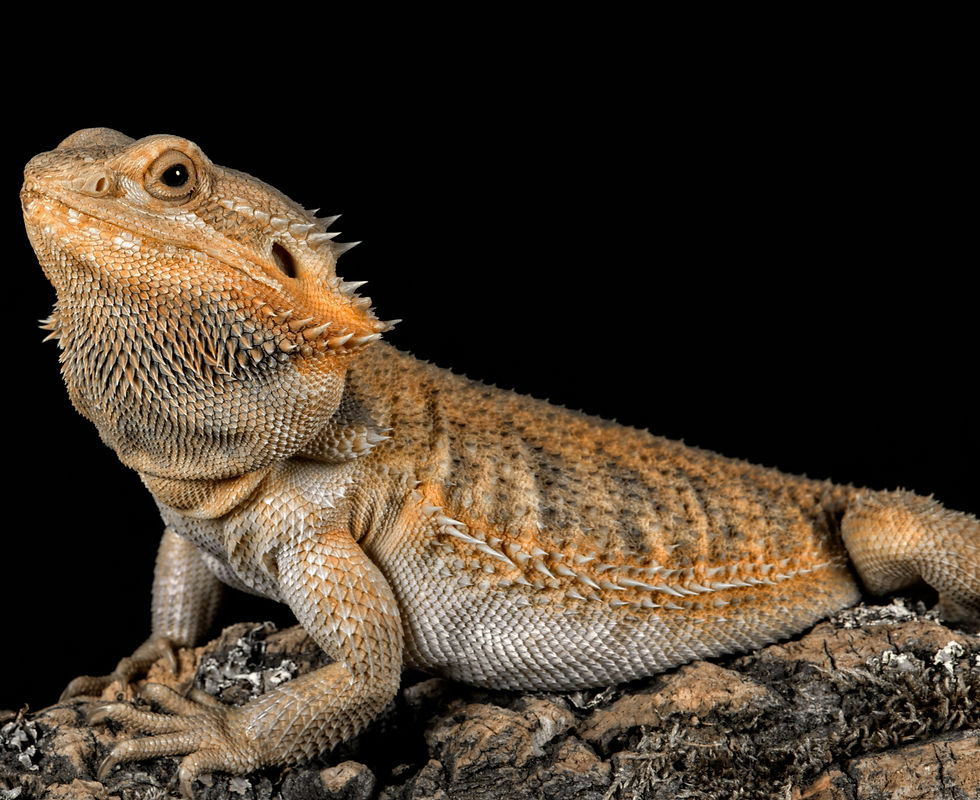
Stress
Hunger
Boredom
Anger
Fear
Curiosity
Comfort
Pleasure
The Latest Research into Reptile Emotions
The ability to bond emotionally with other creatures is considered to be one of the higher orders of brain function. Forming social groups or engaging in group learning behaviors, such as mimicking, are key indicators of emotional development. In 2014, British and Hungarian researchers working with the University of Lincoln in the U.K. completed a fascinating study into bearded dragon social behavior.
The study involved seven bearded dragons, one of whom was trained to retrieve its food from behind a closed door by opening it with its claws. Two other bearded dragons were allowed to observe this behavior and then took turns at trying to mimic the behavior themselves. These two dragons did manage to open the door. However, the other four did not witness the behavior of the trained dragon and couldn’t open the door when they tried.
The researchers behind this project argue that the lizards’ ability to learn behavior from other members of their group indicates a higher order of emotional development than previously suspected. In short, if bearded dragons can mimic social behavior in this way, they do have the emotional development necessary to form bonds with others of their species and with humans.
Do Bearded Dragons Show Affection?
So, can bearded dragons show affection to their human companions? The short answer seems to be yes, although this is to some degree dependent on how you define affection. Dogs, for instance, show a lot of loyalty to their owners and many rarely leave their owners' side. Bearded dragons do not show affection on this level, but they are known to enjoy one-on-one time with their owners.

Based on anecdotal evidence from bearded dragon owners, it seems very clear that these reptiles do bond with their owners. Bearded dragons have been described as engaging in the following behaviors, all of which indicate a certain amount of affection for their owners.
Sitting on the owner’s lap
Curling up on the owner’s neck
Going for walks with the owner, both on and off leash
Seeking out their owner for comfort when frightened
Displaying excitement at their owner’s return by scratching at the glass on their tank
Sleeping next to their owner at night
Watching TV with their owner
Reacting with pleasure when stroked
Reacting with hostility or aggression when someone other than their owner tries to handle them
Recognizing their owner
In fact, many reptile enthusiasts consider bearded dragons to be one of the most sociable reptile species around.
How to Read Your Bearded Dragon’s Emotional Cues
Bearded dragons evince a range of emotions that run the gamut from affection to anger. Creating a strong relationship with your bearded dragons requires a clear understanding of their emotional cues.
As with all creatures, human or reptile, a bearded dragon’s individual personality traits have a lot to do with how they react to their human companions. Some are naturally more ornery, while others are more curious and open to bonding with their owners. Below is a table that can act as a general guideline to understanding your bearded dragon’s emotional cues.
Emotional Cue | Meaning of Cue | Appropriate Response |
Scratching at tank | Boredom, restlessness, excitement, curiosity | Remove bearded dragon from tank and allow them to explore the room. |
Arching or reaching head towards you | Seeking attention | Stroke your bearded dragon gently, allowing them to move onto your lap if they wish. Do not force them to sit with you if they prefer not to. |
Closing eyes when stroked | Displaying pleasure | Keep petting your bearded dragon. This is a very clear indicator of affection and pleasure. |
Calm, still posture | Displaying pleasure | A bearded dragon will remain motionless under your hand if it is enjoying being petted. This is again a clear sign of enjoyment and bonding. |
Puffed out beard, flattened body | Anger, hostility, fear | Leave your dragon alone. If it will let you handle it, return it to its tank to ensure its safety. |
Color change from light to dark | Anger, hostility, fear | Again, its best to leave an angry bearded dragon alone. Separate it from the source of its aggression and do not try to force it to be stroked or petted. |
Vocalizing through hissing | Aggression | Bearded dragons only vocalize when they are angry. Separate hissing dragons and keep your dragon away from the source of its aggression until it calms down. |
Quick head bobbing or weaving movements with enlarged beard and color change | Dominance | Male bearded dragons display dominance behavior by bobbing their heads up and down. They typically show this behavior around other bearded dragons but have also been known to show dominance behavior towards humans. If your bearded dragon displays this behavior to you, return it to its enclosure. It might follow up this behavior with more hostile displays of aggression. |
Slow head bobbing or weaving movement | Submission | Typically displayed by female bearded dragons to males, this behavior has also been observed in captive solitary female dragons towards their human owners. This behavior could be an indicator of attention seeking behavior. Try stoking your bearded dragon’s head. If it backs away, return it to its enclosure and leave it to calm down. |
Arm waving in a circular motion | Submission | Male bearded dragons will show submission to other males by slowly waving one arm and backing away. If your male bearded dragon is frightened of you, it might show this behavior or even engage in more hostile behavior by hissing at you. Return your dragon to its enclosure and leave it alone to calm down. |
Violent, rapid head bobbing or head weaving | Deep stress, fear and anxiety | Male and female bearded dragons engage in this behavior when they feel threatened. Back away from your bearded dragon and remove the source of its fear if you can identify it. If the behavior persists over a long period of time, even with the removal of the animal’s source of fear, take it to your vet. Your bearded dragon’s stress might be due to an underlying medical condition. |
Open mouth, stiff posture, hissing, leaping forward in small bursts | Aggressive attack mode | If your bearded dragon displays these behaviors, it feels that it is under significant threat and is ready to attack. Do what you can to calm him down but be careful of handling your bearded dragon in this state as it can bite you. |
How to Form a Bond with Your Bearded Dragon
Based on all the research available, it seems that the key to developing an affectionate relationship with your bearded dragon is to engage in activities it really enjoys. While the personality of your bearded dragon has a lot to do with the type of bond you will have, there are many things you can do to improve that bond.
Start with a hatchling
The best way to develop a strong and lasting bond with your bearded dragon is to get one that is very young, preferably a hatchling. Hatchlings do tend to show more fear to begin with, but as long as you go slow and allow them some time and space to get used to you, they will adapt to your company very quickly.

Make sure your new bearded dragon has a tank that is large enough to allow it to hide if it feels stressed. Provide it with adequate hiding spaces as well, such as ornamental tree branches and reptile dens. Start by taking your hatchling out for a few minutes at a time to allow it to get used to you. Be patient – this process will take time.
Food-based Bonding
One of the best ways to bond with your bearded dragon is to let it associate you with food. Most lizard species quickly learn to recognize their human owner as the source of their food, leading them to display pleasure and excitement when they see you. Make a point of feeding your bearded dragon often and by hand in the first few weeks you have them.
Young bearded dragons need to eat a lot, so you can give them a cricket or two whenever you approach their tank. You could also encourage your bearded dragon to sit on your lap while you feed them. This allows them to associate you specifically with food and will help them to form a stronger bond with you.
Getting out and about

Bearded dragons are naturally inquisitive creatures who love to spend their time exploring the world outside the confines of their tanks. Take your bearded dragon out of his tank several times a day and allow him to explore a safe room that is clear of other animals. You can also purchase a specialized lizard leash and take him out for controlled walks in your garden or at your local park.
Bearded dragons that are allowed a lot of freedom to explore seem to associate their owners with fun activities and will scratch at their tank to be let out when they see them. Just make sure that you keep a close eye on what your bearded dragon is doing so they don’t hurt themselves.
Swimming
This may seem like an odd choice, but bearded dragons do actually enjoy time in the water, as long as it’s not too cold. You can use a kiddie pool or fashion a mini swimming pool out of a large shallow plastic container. It just needs to be three to four times the length of your bearded dragon to allow enough room for movement.
Don’t make the water too deep – about knee-height on your bearded dragon will do. Also ensure that the water is chlorine-free, and that the temperature is at least 90 degrees.
Bedtime

Once your bearded dragon is comfortable being handled, you could try encouraging it to sleep with you. Not all lizard owners like sleeping with their pets, but for some, this could be a great way to strengthen emotional bonds.
Start by placing a heating pad next to your pillow, and put your bearded dragon on top of it. Bearded dragons do like basking under a hot lamp and sleeping on warm rocks, so this is a great way to encourage them to sleep next to you. Not all bearded dragons take to it, but many owners who do sleep with their bearded dragons report that they have stronger bonds with their pets.
Pay attention to emotional cues
This is the most crucial aspect of bonding with your bearded dragon. Living in captivity can be stressful for any animal, so it’s important to gauge how your bearded dragon is feeling and to react appropriately. Some key points to remember are
1. Never force your bearded dragon to accept attention – if they don’t want to be petted, let them go.
2. Don’t introduce new people to your bearded dragon abruptly. The chances are your bearded dragon will react aggressively to anyone who is not their owner. You can get them used to new people very slowly over time. Never force your bearded dragon to accept handling by someone who is a stranger to them.
3. Be careful about allowing your bearded dragon to be around other animals, especially excitable animals like big dogs. Many bearded dragons become used to their interspecies animal companions, but it does take time and patience.
4. If you do want to keep multiple bearded dragons and mating pairs, make sure to provide each one with its own vivarium. Bearded dragons, especially males, can be very territorial.
Picking the Perfect Bearded Dragon Companion
There are several different subspecies of bearded dragons, most of which are available at pet stores. All of them exhibit the same range of behaviors, so the only real difference is in appearance.
Below is a short list of some of the most popular types of bearded dragons sold at pet stores.
Inland Bearded Dragon

The Inland bearded dragon is the most commonly sold bearded dragon in the world, and the variety that you will find most often in pet stores. Also known as the Central or Yellow-headed bearded dragon, this subspecies is typically light brown to yellow in color and is relatively inexpensive. They have a lifespan of approximately ten years and do very well in captivity.
Eastern Bearded Dragon
Considered to be more aggressive than the Inland bearded dragon, this subspecies is distinctive for its dark greyish-black or reddish-brown coloring. They are extremely territorial, so they cannot be housed with other bearded dragons. This particular subspecies is on the larger scale, with males growing up to 60 centimeters long.
Western Bearded Dragon
The Western bearded dragon is typically grey or light brown in color, although it does assume a darker hue when angry. Smaller than its eastern cousins but still pretty large, the Western bearded dragon grows to be about 38 to 40 centimeters long. They are also an arboreal species, so you will need to provide them with plenty of climbing branches and fresh vegetation.
Rankin’s Bearded Dragon
Also known as the Pygmy or Dwarf bearded dragon, this diminutive subspecies only grows to be about 30 centimeters long. It has a yellowish-brown coloration, similar to the Inland bearded dragon, but has a shorter lifespan of 6 to 8 years. Known to be a very social creature, this particular type of bearded dragon is a great choice for kids or classrooms.
There are two other subspecies of bearded dragon that you can occasionally find at pet stores, namely the Kimberley bearded dragon and the Nullarbor bearded dragon. However, not very much is known about these subspecies because they live in small, remote areas in their native Australia. If you do come across one, you will need to seek out specialist information on their care and diet.
What It All Means for You and Your Bearded Dragon
In conclusion, while bearded dragons may not experience emotions with the same depth or complexity as dogs or cats, they are capable of forming bonds with their human companions and show a range of feelings such as comfort, curiosity, and even affection. Their unique personalities, combined with the right care, patience, and attention to their emotional cues, allow them to become engaging and rewarding pets. By understanding how they communicate and respecting their boundaries, owners can build a meaningful relationship with these fascinating reptiles, making them one of the most sociable and enjoyable lizard species to keep.


Comments